
Request a move quote
Last-updated date: May 2026
Moving to Italy is one of the most appealing relocations UK families make, but since Brexit, the administrative reality has changed in ways that a lot of people only discover after they’ve started planning. Italy is now a foreign country for customs purposes. Your belongings are subject to import procedures that simply didn’t exist before 2020.
This guide explains what actually happens, from the moment your shipment leaves the UK to the moment it arrives at your Italian address, including the customs step, the documentation requirements, and the Permesso di Soggiorno deadline that most UK movers miss.



Road freight is the standard method for UK-to-Italy household moves. Your goods travel in a vehicle from your UK address, through the Channel Tunnel or via ferry to France, and then south through France and into Italy. For most destinations, this means a transit time of 5–14 days from collection to delivery.
The range reflects geography. A move to Milan or Turin is typically at the shorter end, 5–7 days. A move to Naples, the heel of Italy, or Sicily involves a longer road distance and, in the case of the islands, a ferry crossing; plan for 10–14 days minimum.
For smaller volumes, a few rooms rather than a full house, you may be offered a groupage (shared container) service, where your goods travel alongside other customers’ shipments. This can reduce costs significantly but may extend the transit window to 2–4 weeks.
Cost ranges for road freight:
These figures are starting points. Volume, access conditions at both properties, packing requirements, and the exact destination in Italy all affect the final figure. The only reliable way to get a number is a proper survey.

Before Brexit, moving your belongings to Italy involved no customs process; goods moved freely within the EU. That changed on 1 January 2021. The UK is now a third country for EU customs purposes, which means your household goods are treated as an import when they cross into Italy.
The good news: Transfer of Residence (Trasferimento di Residenza) relief allows you to import your personal effects duty-free, provided certain conditions are met.
Your removal company provides guidance on the exact format required and will submit the customs declaration through their Italian in-country partner. You are responsible for providing the documentation.
We always recommend speaking directly to the relevant embassy for the most accurate and up to date moving advice:
When your shipment crosses into Italy, the removal company’s in-country partner takes responsibility for customs clearance. This is the person or organisation on the ground in Italy who knows Italian customs procedures, holds the relevant licences, and manages the relationship with Italian customs authorities on your behalf.
Your move manager in the UK coordinates with the Italian partner throughout the process. You will typically have one point of contact: your move manager, who keeps you informed of the customs status without you needing to manage the Italian side directly.
The customs clearance process typically takes 1–3 business days after the shipment arrives at the Italian customs point, provided all documentation is in order. If anything is missing or needs clarification, clearance can be extended, which is why having complete documentation before the shipment departs the UK matters.

Once your belongings have cleared customs and you are living in Italy, there is one administrative step that affects virtually every UK citizen relocating there, and it has a strict deadline.
The Permesso di Soggiorno (residence permit) is required for all non-EU nationals, including UK citizens post-Brexit, who intend to stay in Italy for more than 90 days. You must apply within **8 days of your arrival** in Italy.
This is not optional, and it is not your removal company’s responsibility. It is a requirement of Italian immigration law, and the application is your personal administrative task.
How to apply: Go to a post office (any post office with a Sportello Amico counter) and ask for a “Kit Permesso di Soggiorno.” Complete the kit and submit it at the post office. The post office forwards your application to the local Questura (immigration authority), which will contact you for a biometric appointment.
Why it matters for your move timing: The 8-day deadline begins from the day you arrive. If your belongings arrive before you do, or if you arrive and get absorbed in unpacking, the deadline can slip by without you noticing. Knowing about it before you land means you can plan your first week in Italy to include this as a priority task.


Italy is a long country with very different delivery logistics depending on your destination. Here is what to know by region:
Rome and central Italy: Road freight arrives via the A1 (Autostrada del Sole). Access in Rome’s historic centre (ZTL zones) can restrict delivery timing; your move manager will coordinate with the Italian partner on permitted access windows. Allow additional planning time if you are moving into the centro storico.
Milan and northern Italy: The closest point to the UK by road. Transit is typically 5–7 days. Milan’s ZTL zones apply in the city centre but are less restrictive than Rome’s. Turin, Venice, and Verona are all accessible with standard transit times.
Naples and southern Italy: 8–11 days is a realistic transit window from the UK. Naples is accessible by road; the city’s narrow streets in older neighbourhoods require careful logistics planning.
Sicily and Sardinia: Ferry connections from the Italian mainland add 1–2 days to the delivery window. The crossing and booking logistics are managed by the in-country partner. Allow 12–14 days as a realistic minimum from the UK.
Florence and Tuscany: ZTL (Limited Traffic Zone) regulations are among the strictest in Italy. Delivery windows in the city centre are typically restricted to morning hours. Many properties in historic Tuscan towns have access challenges. Discuss this with your move manager early.
A lot of what happens during an international removal is invisible to the customer, which is both reassuring and, occasionally, anxiety-inducing. Here is what is actually happening behind the scenes during your UK-to-Italy move:
The surveyor who assessed your move at the UK end is a different person from your move manager; they assess the volume and logistics, and the move manager takes responsibility for the file from the quote stage onwards. The continuity is in the move file, not in expecting the same person to appear at both ends.





If you’re moving to Italy, it’s very likely you’ll need to exchange a significant amount of currency. Many people lose out by using their bank, assuming it’s the only option. However, there are specialist currency exchange providers that offer more competitive rates and can help you save thousands. To find out how to make your money go further during your move, speak to one of our move managers, click here, or give us a call: +44 20 7097 5335.
We always advise taking out move protection liability cover with us on every move. Although we like to think we’re the best in the industry, the odd accident can occasionally happen. For added peace of mind, make sure to speak to one of our move managers about this.
Post-Brexit, UK-registered vehicles cannot remain on UK plates once you are a resident of Italy. You must re-register your car in Italy within 12 months of establishing Italian residency.
The re-registration process (immatricolazione) involves a compliance inspection to verify the vehicle meets Italian road standards, an Italian MOT (Revisione), Italian number plates, and Italian vehicle documentation (Libretto di Circolazione). Italian insurance is required; UK insurance is not valid for Italian-registered residents.
Italy drives on the right, so your UK right-hand drive car is technically roadworthy but inconvenient and typically attracts higher insurance premiums from Italian insurers. Many UK movers sell their car before leaving and buy a left-hand drive vehicle locally.
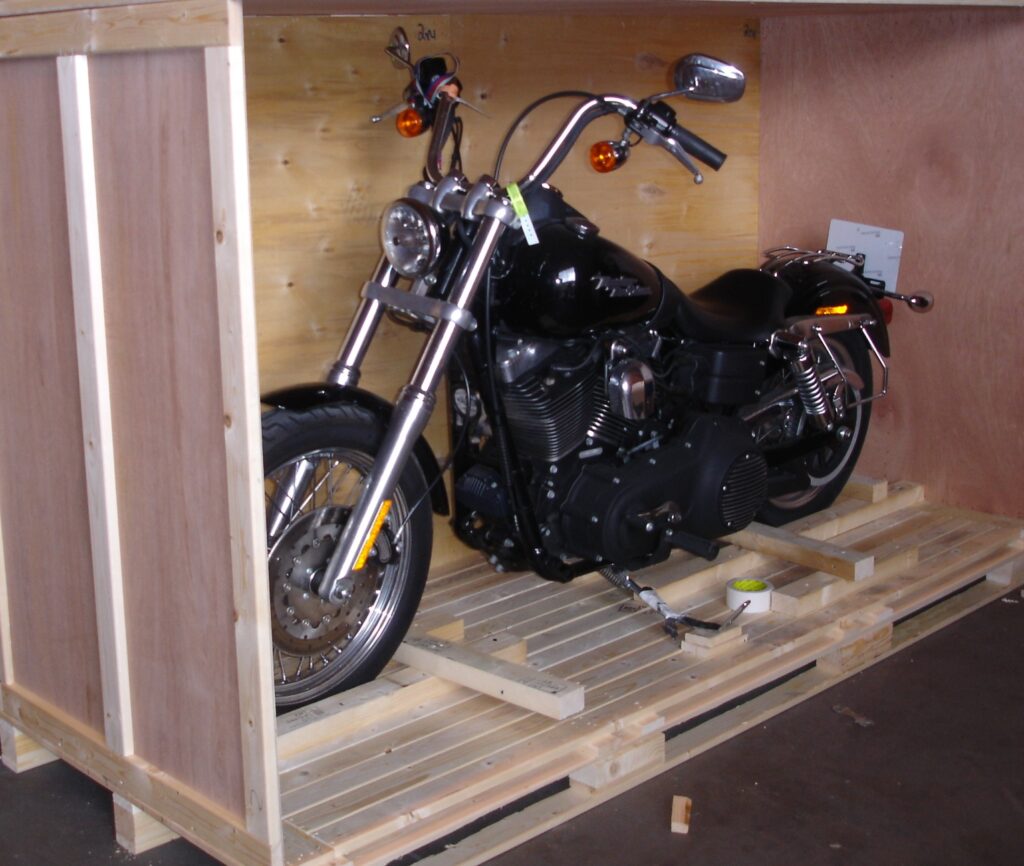
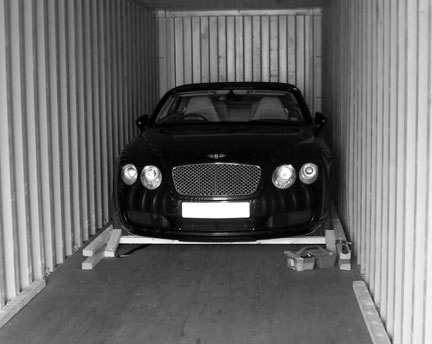
If you do want to ship your car, vehicle transport is arranged separately from your household removal; by road, ferry, or enclosed container. Your move manager can coordinate this alongside your household move. Costs for UK-to-Italy vehicle transport typically range from £500–£1,500 depending on the vehicle and destination region. Motorcycles follow a similar re-registration process with a generally simpler compliance inspection.
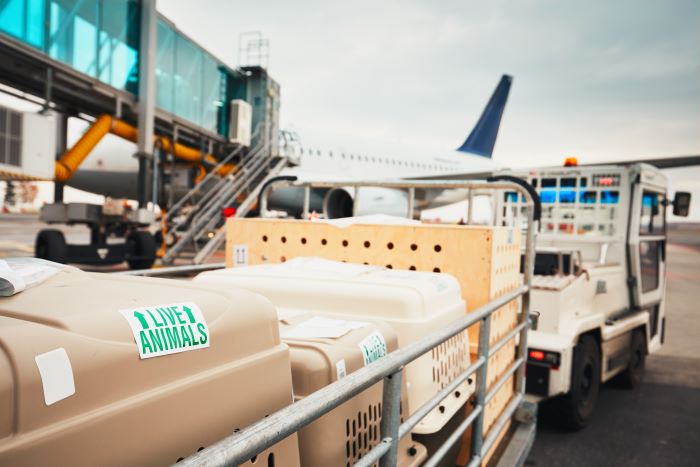
Italy is an EU member state, so standard EU pet import rules apply to UK pets post-Brexit.
To bring a cat or dog to Italy, you need:
No quarantine is required if all conditions are met. The AHC replaces the old EU Pet Passport for UK-based pets and must be obtained fresh before each trip. Contact the APHA (Animal and Plant Health Agency) to find an Official Veterinarian. Allow at least two weeks for the vaccination and certificate process if your pet’s rabies vaccination is not current.
Other animals, rabbits, birds, and rodents have different requirements, and some may need an import permit. Check with your vet and the Italian Ministry of Health for the rules specific to your pet type.
Generally permitted
Most used personal effects ship without issue under Transfer of Residence (Trasferimento di Residenza) relief; furniture, clothing, books, kitchenware, and personal electronics. Items must be used and owned for at least 6 months to qualify.
Restricted; may require declaration, permits, or duty
Prohibited
Italy does not impose a blanket content inspection on books or media, unlike some other destinations. Standard customs rules on prohibited content apply.
To claim Transfer of Residence (Trasferimento di Residenza) relief, you need a valid passport, proof of previous UK residency (council tax bills, bank statements covering 6–12 months), and a fully itemised inventory of all goods. Goods must have been owned and used for at least 6 months to qualify for duty-free import.
Road freight from the UK to Italy typically takes 5–14 days depending on your destination. Northern Italy is at the shorter end; southern Italy and the islands are at the longer end. Customs clearance adds 1–3 business days.
The Permesso di Soggiorno is the Italian residence permit required by all UK citizens planning to stay in Italy for more than 90 days. You must apply within 8 days of arriving; this is a strict legal deadline. Application is made at any post office with a Sportello Amico counter.
If you qualify for Transfer of Residence relief; goods owned and used for at least 6 months, genuine change of primary residence; your personal effects can be imported duty-free. New items, commercial goods, and vehicles are assessed separately.
Road freight typically ranges from £1,500–£2,500 for a one-bedroom volume and £3,500–£5,500 for a three-bedroom household. A proper survey before booking is the only reliable way to get an accurate figure.
The removal company’s Italian in-country partner manages customs clearance on your behalf, using the documentation you provided. After clearance (typically 1–3 days), goods proceed to your delivery address. Your move manager remains your primary contact throughout.
Real feedback from people who chose our international moving company.
“Relocating to Italy felt like a big step, but everything was handled with such care and professionalism. Yasmin kept updated throughout, and our belongings arrived safely and on time. It made settling into our new surroundings so much easier.”
“Our move to Italy was organised and stress-free from start to finish. The team were responsive, efficient, and clearly experienced with international moves. Everything arrived in excellent condition, which gave us complete peace of mind.”
“Moving to Italy could have been overwhelming, but the support we received made all the difference. Communication was clear at every stage, and every detail was handled seamlessly. It turned a complex move into a very positive experience.”